
Trusted by 200+ K-12 Districts
Confidently know in seconds whether any EdTech tool is safe for your district to use, and compliant with AI, privacy, and accessibility laws
No more manual vetting or reading privacy policies. Approve the right tools faster, support teachers, and protect students.
Approve tools teacher’s need: Evaluate tools based on actual risks, not just if a contract is signed.
See exactly why a tool passed or failed: Get every risk broken down and explained in plain English.
Continuous compliance with all privacy and AI laws: COPPA, FERPA, state laws, and new AI legislation.

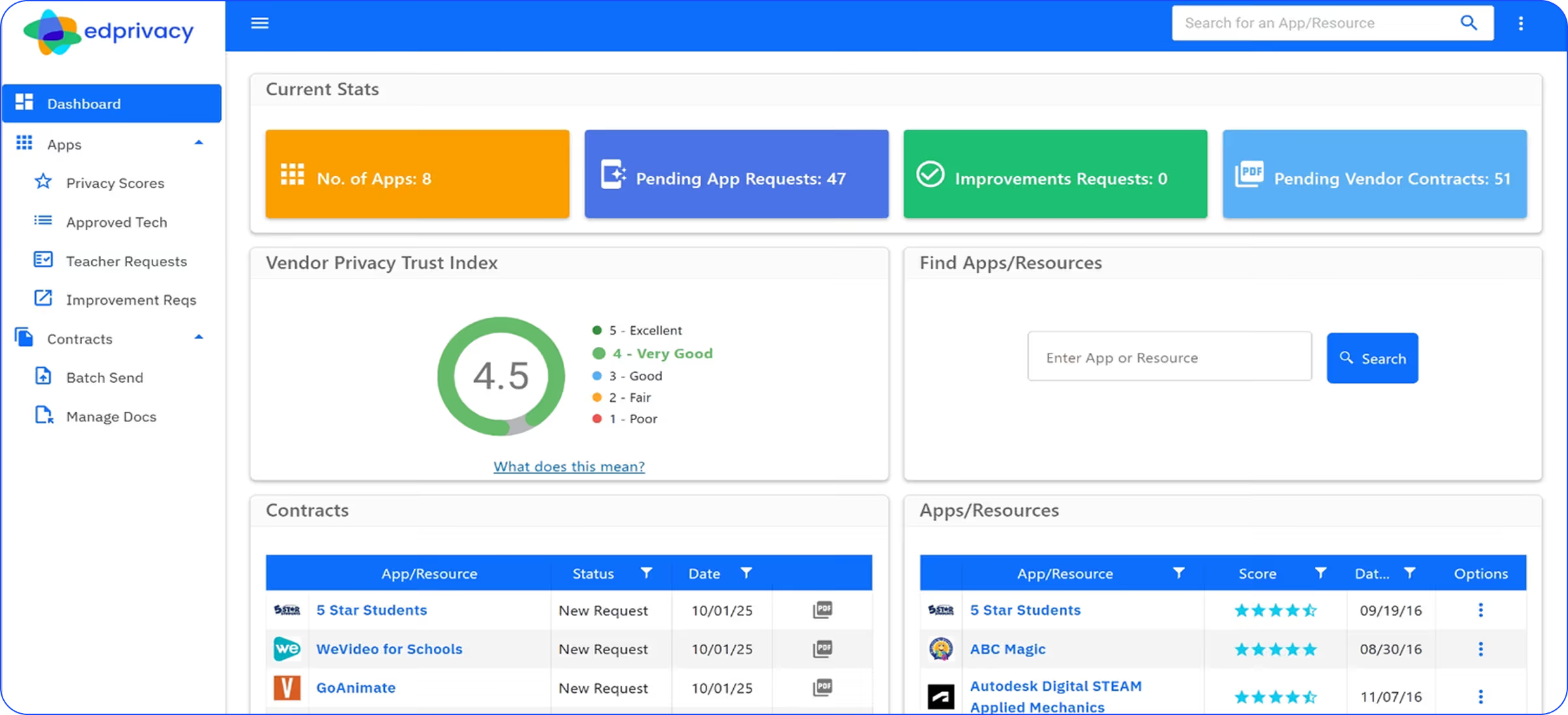
Stop vetting app requests by hand and trying to keep up with privacy laws. Our platform does it for you instantly
More than 1,000 student privacy bills have been introduced since 2014. In just 2026 alone, 134 AI education bills were added across 31 states.
This climbs daily with AI, and keeping up can get overwhelming fast...
Before EdPrivacy
Spending hours to read policies manually
Separate tools for privacy, AI, accessibility
Scattered, undocumented decisions
Falling behind on every new state and AI law
Apps blocked based on contract availability
After EdPrivacy
A clear “approve” or “deny” answer in seconds
Privacy, AI, and accessibility scored in one place
Every decision documented and audit-ready
Scores updated as vendor policies change
Apps reviewed based on their actual safety
Instant Access
No credit card
50 state coverage
HOW IT WORKS
Know if any EdTech tool is safe to use in seconds, not hours
Step 1
Look up ANY EdTech app, tool, or website
Search any app, tool, or website from our database get a clear safety score right there on the spot.
Step 2
Get a clear “approval” or “deny” answer in seconds
Every tool comes back as “yes” or “no”, with a guidance statement explaining why in plain English.
Step 3
See exactly WHY a tool passed or failed
Get an in-depth review of student data privacy, AI risk, and accessibility, each backed by evidence & continuously updated.
Instant Access
No credit card
50 state coverage
Trusted by 200+ K-12 districts to cut vetting time, and stay compliant
From rural schools to big-city systems, we work with districts of every size and every state's privacy laws.
Helping Forsyth County save hundreds of hours and thousands of dollars per month
“Edprivacy’s app rating system is essential to protecting our student’s data privacy.”

2,500+
total hours saved / yr
$98K
in costs saved per year

We cut costs by 3X for Sheridan County Schools and improved compliance
"EdPrivacy is an essential resource that provides our district with expert analysis to answer all student app safety and privacy questions."

470+
total hours saved / yr
$20.3k
in costs saved per year
We cut costs by 3X for Sheridan County Schools and improved compliance
"EdPrivacy is an essential resource that provides our district with expert analysis to answer all student app safety and privacy questions."
470+
total hours saved / yr
$20.3k
in costs saved per year
Instant Access
No credit card
50 state coverage
Make clear decisions on any tool with peace of mind, without spending hours reading confusing policies
Every tool is graded against FERPA, COPPA, and your state's privacy laws.
Breakdown of why apps passed/failed
Essential legal checks (data use, retention, encryption, etc)
Flags apps that secretly track/advertise to students
Score apps against your district's laws, even as they change so you can always stay compliant
New privacy and AI laws keep coming out faster than your team can keep up with.
We track all 50 states' privacy & AI laws
Real-time alert if a tool is no longer safe
Scores update when laws changes
Know the AI risk of any EdTech tool instantly, with ratings always updated as new bills emerge
See how vendors handle student data, tests for bias, etc.
Checks the AI is tested for bias
AI claims checked against 134+ state bills
Flags AI that stores student data long-term
Support innovation with a patented, human-overseen system you can trust
Our privacy scoring system was shaped through a partnership with iKeepSafe, a leading privacy organization, and informed by legal experts in student data privacy, including a Stanford Law-trained attorney.
Everything your district needs to manage EdTech tools safely
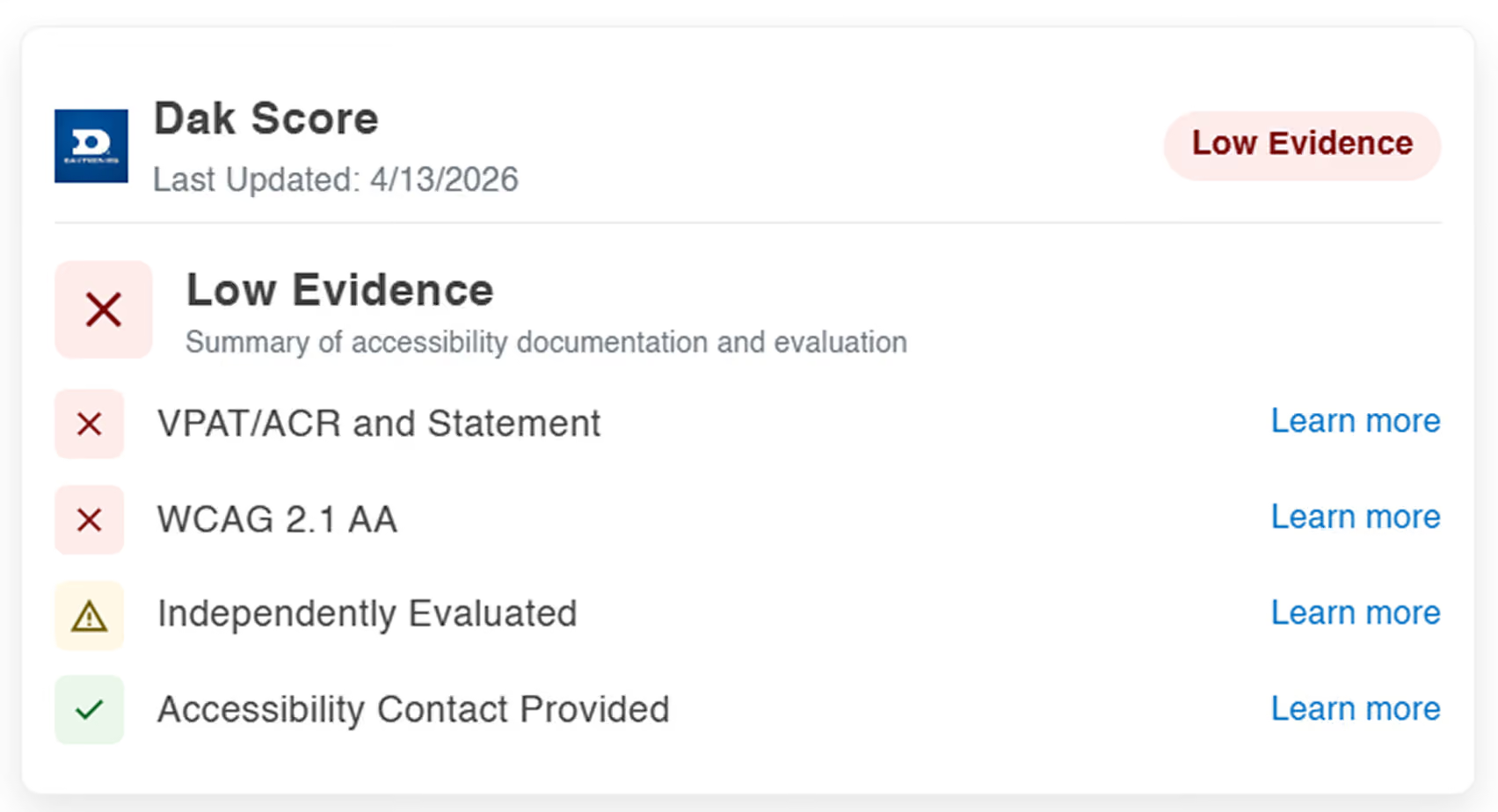
Ensure full compliance with accessibility guidelines
Check every tool for a VPAT, WCAG 2.1 AA conformance, an independent review, and an accessibility contact.
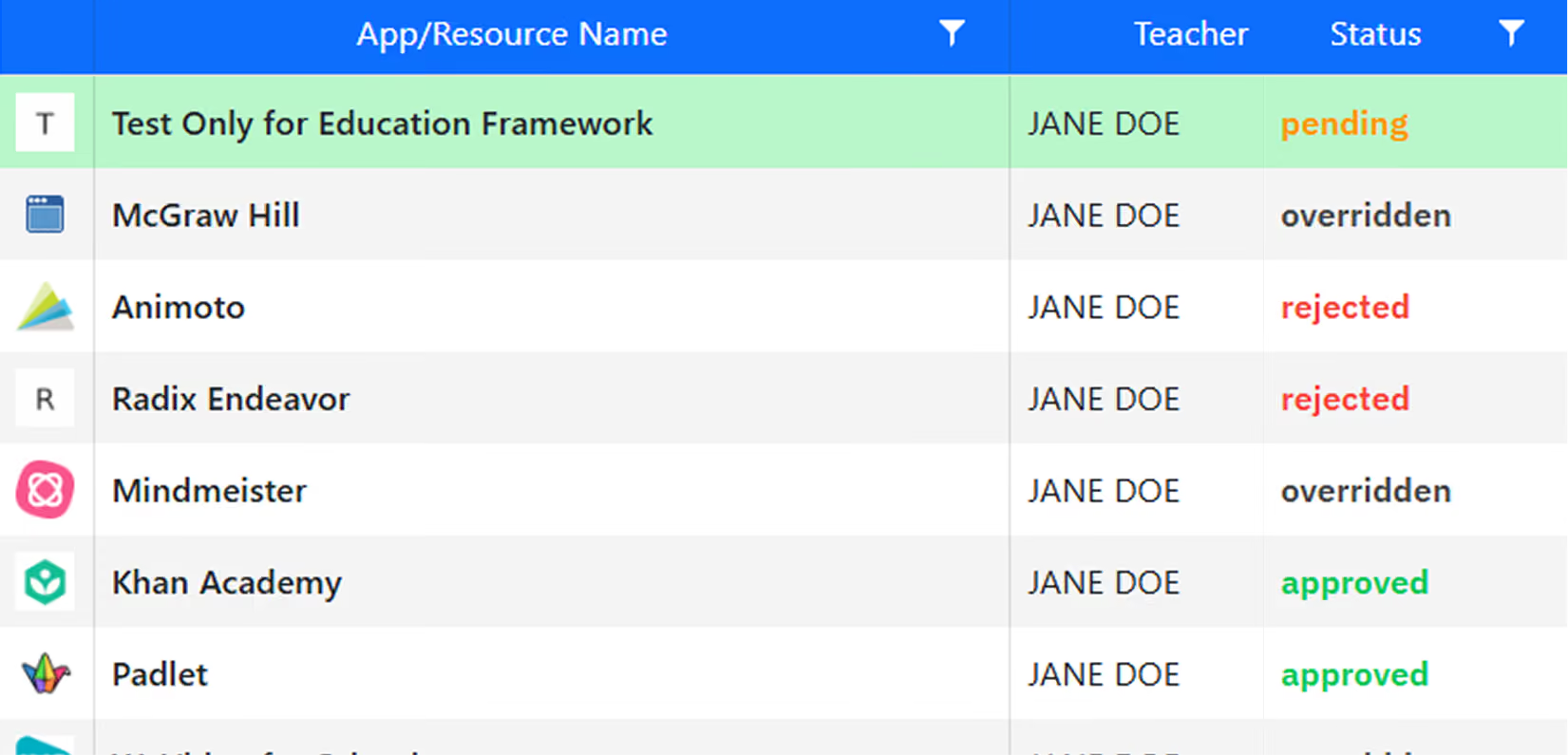
Let teachers request tools, with you in control
Teachers can ask for apps they want via our gated system, so nothing gets approved until your team signs off on it.
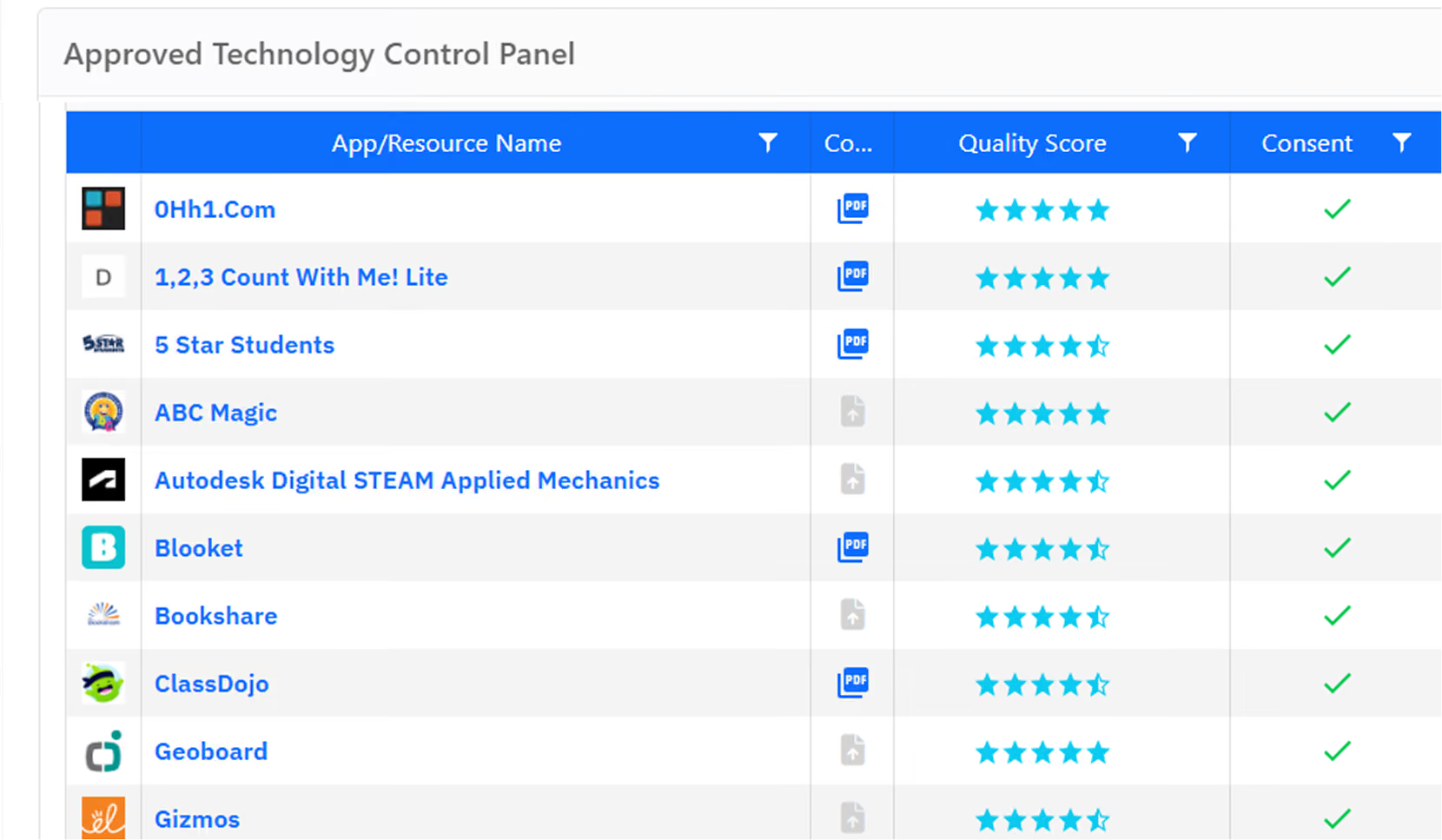
Publish approved tools to teachers and parents
Keep a public list for parents and an internal one for staff, updated automatically when approving tools.
Instant Access
No credit card
50 state coverage
Join district leaders giving teachers faster answers without holding back innovation
“We feel secure and empowered”
“Thanks to their dedication to student privacy, we feel empowered to focus on supporting our community.”
“User-friendly interface for tracking policies”
“We can finally keep our students safe in the virtual world as we do in the physical world.”
“Their proprietary rating system is brilliant”
“Their system is brilliant, allowing users to understand the safety and security of thousands of apps.”
“Essential resource that provides expert analysis”
“Provides our district with expert analysis to answer all student app safety and privacy questions.”
“Team collaborates effectively with vendors”
“The team collaborates effectively with vendors, driving improvements to their data privacy policies”
“Essential to protecting our student’s privacy”
“EdPrivacy's app rating system is essential to protecting our student’s data privacy”
HOW WE STACK UP
Vet, score, document, and publish every edtech tool from one platform

Good tools get in to support innovation
Blocks anything unsigned, even good apps
Limited to their own database
Scores based on your state and district
One standard national agreement
One-size-fits-all
Scored against law, including op practices
Relies only on a signed contract
Side feature and not in depth
Scores training data, bias, and oversight
Not covered
Limited or missing
VPAT and WCAG 2.1 AA checked with breakdown
Not covered
Limited or missing
Constantly updated as new laws or bills pass
One-time agreement that doesn’t update
Not their core focus
Instant Access
No credit card
50 state coverage
Frequently Asked Questions
Most tools solve one slice. SDPC checks whether a vendor signed a contract. Lightspeed and LearnPlatform started as usage or curriculum systems with privacy bolted on as an add-on. EdPrivacy runs the full workflow in one place: privacy scoring, AI risk, accessibility, contracts, teacher requests, and public approved lists. It also judges what a tool actually does with student data instead of whether a contract exists, so a safe tool without a signed agreement can still get approved.
Yes. Every score comes from a review of the vendor's privacy policy, terms of use, and security documents, checked against the exact data points the law requires. There's also an operational check that catches what a policy hides, like ad-tracking pixels or student profiling that contradicts what the vendor claims on paper. A person verifies and audits every score, so it isn't a machine guessing on its own. The source policies stay linked on each app if you ever want to read them yourself.
Yes. Guidance is jurisdiction-based, so a district in New York gets a different guidance statement than one in Illinois, matched to each state's requirements. EdPrivacy tracks privacy and AI laws across all 50 states and updates a tool's score when a law or a vendor policy changes, then flags any district using that tool.
All three, scored in the same workflow. AI risk reviews check whether a vendor is transparent about AI use, whether student data trains their models, how AI handles storage and deletion, bias safeguards, and human oversight. Accessibility reviews look for a VPAT or ACR, WCAG 2.1 AA conformance, an independent evaluation, and a named accessibility contact. This matters more heading into 2027, when edtech vendors will need to meet WCAG 2.1 AA to be used in schools.
You can request it through an on-demand assessment. Provide the website link, the privacy policy URL, and the platform it runs on, then it gets vetted and added, usually within 24 to 48 hours. The library already covers 24,000+ apps, so most requests are already scored, but the on-demand system handles anything outside it.
No. EdPrivacy runs alongside what you have. Plenty of districts keep their SDPC data sharing agreements and use EdPrivacy to manage the vetting and documentation around them in a cleaner interface. Others run it next to LearnPlatform for curriculum work. You can drop the other tool or keep both.
Rollout is fast because there's nothing to install. It uses single sign-on with Google, Microsoft 365, or ClassLink, and it's a roles-based system, so teachers get request access while your admins keep vetting and approval controls. Teachers request apps, those requests route to your admin team for review, and approved tools publish to internal and public lists.
Yes. Education Framework uses SSL encryption, US-based servers, and commercially reasonable safeguards, and it collects only the information needed to run the service. It never sells or rents personal information for marketing. If you ever terminate, all personal data is deleted within a commercially reasonable time, no later than 14 business days.
Often, yes. Privacy compliance tools that vet applications and support FERPA, COPPA, and state requirements tend to qualify for education grants. States like California, New York, Illinois, and Missouri have dedicated funding, and new programs open regularly. EdPrivacy supplies documentation to help align a purchase with grant criteria.
Trusted by 200+ K-12 Districts
Support innovation and protect students, with apps vetted in seconds, not hours
Get guidance in seconds, not hours
Privacy, AI, and accessibility in one place
Stay compliant as new laws roll out
Show your board exactly why each tool was approved
Say yes confidently to the tools your teachers ask for